OOPS concept…
Class
Class is a blue print of object .
class create n number of object.
To create a class, use the keyword class.
classification of object.
A class — in the context of Java — is a template used to create objects and to define object data types and methods. Classes are categories, and objects are items within each category. All class objects should have the basic class properties.
Class is group of objects that share common properties and behaviour,class body is surrounded by braces{},collection of object is a class.
Object
Object is called instance of class,and real world entity.
object cant execute without class.
Each object has an identity, a behavior and a state
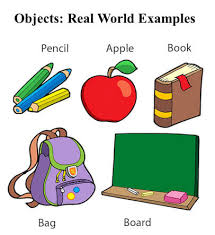
Everything in Java is associated with classes and objects, along with its attributes and methods. For example: in real life, a car is an object. The car has attributes, such as weight and color, and methods, such as drive and brake.
Example;
Inheritance
Acquiring the properties of one class to another class.
Example:parent class to child class,property(state&behaviour)
To inherit the program to parent class child class.
There are different types of inheritance viz., Single inheritance, Multiple inheritance, Multilevel inheritance, hybrid inheritance, and hierarchical inheritance.
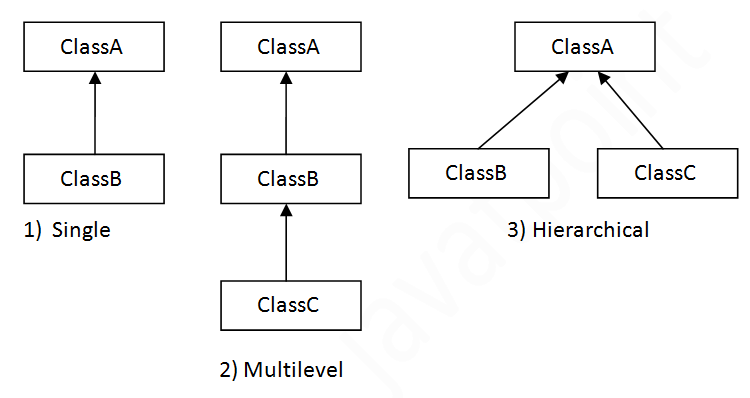
Single Inheritance: When a derived class inherits only from one base class, it is known as single inheritance.
Multilevel Inheritance:When a class extends a class, which extends anther class then this is called multilevel inheritance. For example class C extends class B and class B extends class A then this type of inheritance is known as multilevel inheritance.
Hierarchical Inheritance:The type of inheritance in which more than one derived class inherits the properties of the same base class is called hierarchical inheritance. There are multiple child classes and a single parent class.
Hybrid Inheritance:Class A as Animal Class, Class B as Mammals, Class C as Herbivores, Class D as Cow. Mammals can be derived from Animal class, and Cow is a combination of Herbivores and Mammals. This relationship well defines the combination of Multiple Inheritance and Single Inheritance.
Example;
Abstraction
Abstraction is a process of hiding the implementation details showing only Funcyionality to users.
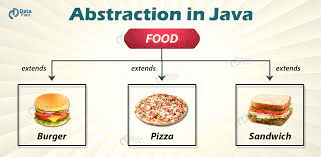
In java, abstraction is achieved by interfaces and abstract classes. We can achieve 100% abstraction using interfaces. Abstract classes and Abstract methods : An abstract class is a class that is declared with an abstract keyword. An abstract method is a method that is declared without implementation.
The main purpose of abstraction is hiding the unnecessary details from the users. Abstraction is selecting data from a larger pool to show only relevant details of the object to the user. It helps in reducing programming complexity and efforts.
Example;
Polymorphism
Polymorphism means “many forms”, and it occurs when we have many classes that are related to each other by inheritance it show only in runtime not show in complie time.
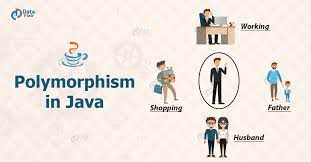
Polymorphism in java is a concept by which we can perform a single action in different ways. Example ;one actor act in different form
In Java, polymorphism refers to the ability of a class to provide different implementations of a method, depending on the type of object that is passed to the method. To put it simply, polymorphism in Java allows us to perform the same action in many different ways…
Example;
Encapsulation
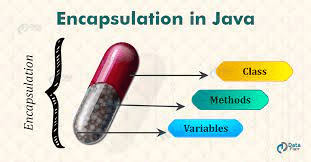
Encapsulation in Java is the process by which data (variables) and the code that acts upon them (methods) are integrated as a single unit. By encapsulating a class’s variables, other classes cannot access them, and only the methods of the class can access them.
A class is a program-code-template that allows developers to create an object that has both variables (data) and behaviors (functions or methods). A class is an example of encapsulation in computer science in that it consists of data and methods that have been bundled into a single unit.
Example;
 Site Title